Training after a stroke. At home, where your life happens.
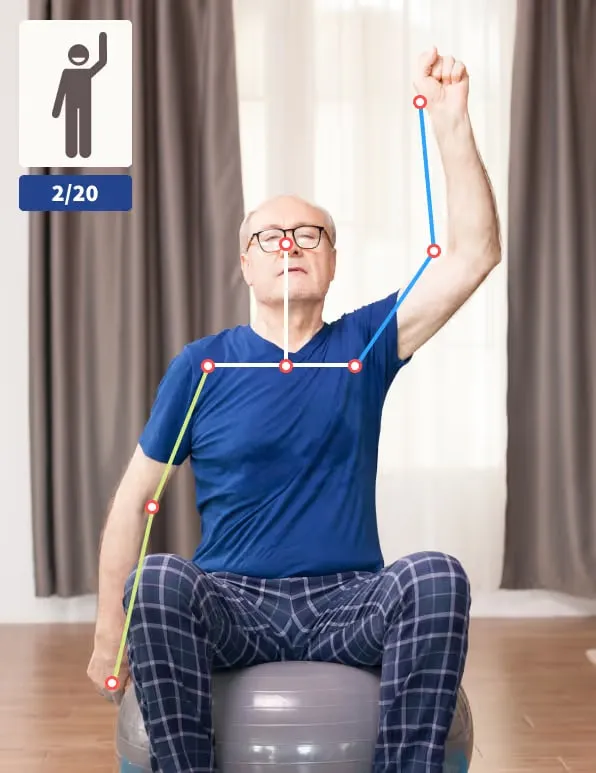
MoveMe helps people who have had a stroke train at home. The phone camera sees the movement, counts the repetitions and corrects you. Your cheering squad follows along.
This is what the app looks like today.
will have a stroke in their lifetime.
- Losing control of your own body.
- Losing the ability to speak.
- Losing control of your own thoughts and feelings.
But the stroke isn't really what we want to talk about. It's the life afterwards.
Life afterwards
After a stroke you get good care at the hospital. Then you come home. And that is often where it stops.
Most people know they should train. But they don't. Not because they don't want to. But because they are tired. Because they are alone. And because it doesn't fit into the lives they live.
So how do we make something people actually want to use, in the life they actually live?
How it works
- 1
Pick today's program
Easy start, steady training or full speed. You choose by how you feel today.
- 2
Put the phone on the table
No sensors. No charging. No pairing. The camera is enough.
- 3
The camera sees the movement
The app counts the repetitions, corrects you as you go and shows your progress.
- 4
Your cheering squad follows along
Family, friends and your physiotherapist can see that you trained, and send a cheer.
Many repetitions build new pathways in the brain. So the training has to be something you can face, day after day.
How do you keep training for weeks, months, maybe years?
We have three answers.
We make the repetitions easier to keep up
Some exercises are wrapped as games, like the balloons and the finger orchestra. Others are plain exercises with clear steps. What they share is that you can see it moving forward.
We show progress, day by day
Your week is a ring that fills up. You see what you have done, and what the next step is.
We celebrate milestones and cheer
Also when it isn't going well. A small cheer in everyday life can be what makes you do one more session.
You are not alone
Around 1 in 3 people who have a stroke also experience depression. Loneliness is a big part of the picture. Rehabilitation isn't only about the body. It's about motivation, belonging, and having someone who cheers for you.
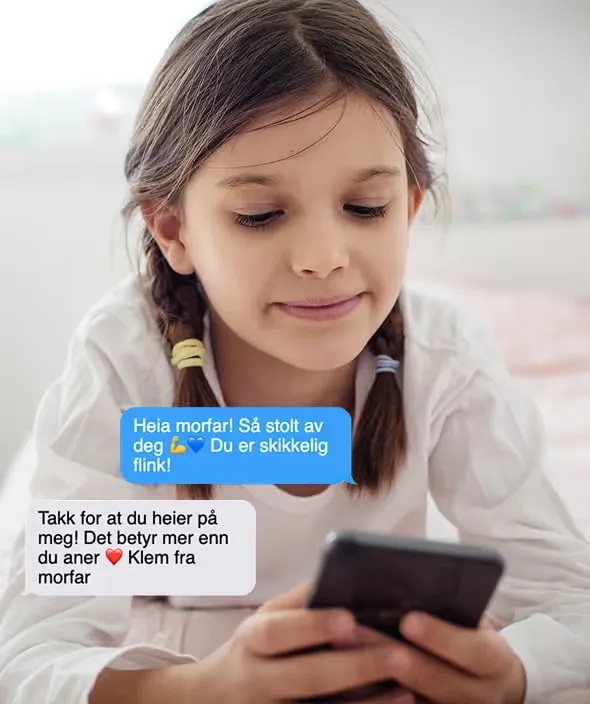
A grandchild can follow along when grandad trains, reaches new goals and keeps the rhythm up. She can send a heart or a short message, and give the little lift that is needed exactly when it is needed.
This doesn't replace the physiotherapist. It gives her more time for what matters most. She sees the progress, adjusts the exercises and follows up between appointments.
It started with Mikkel
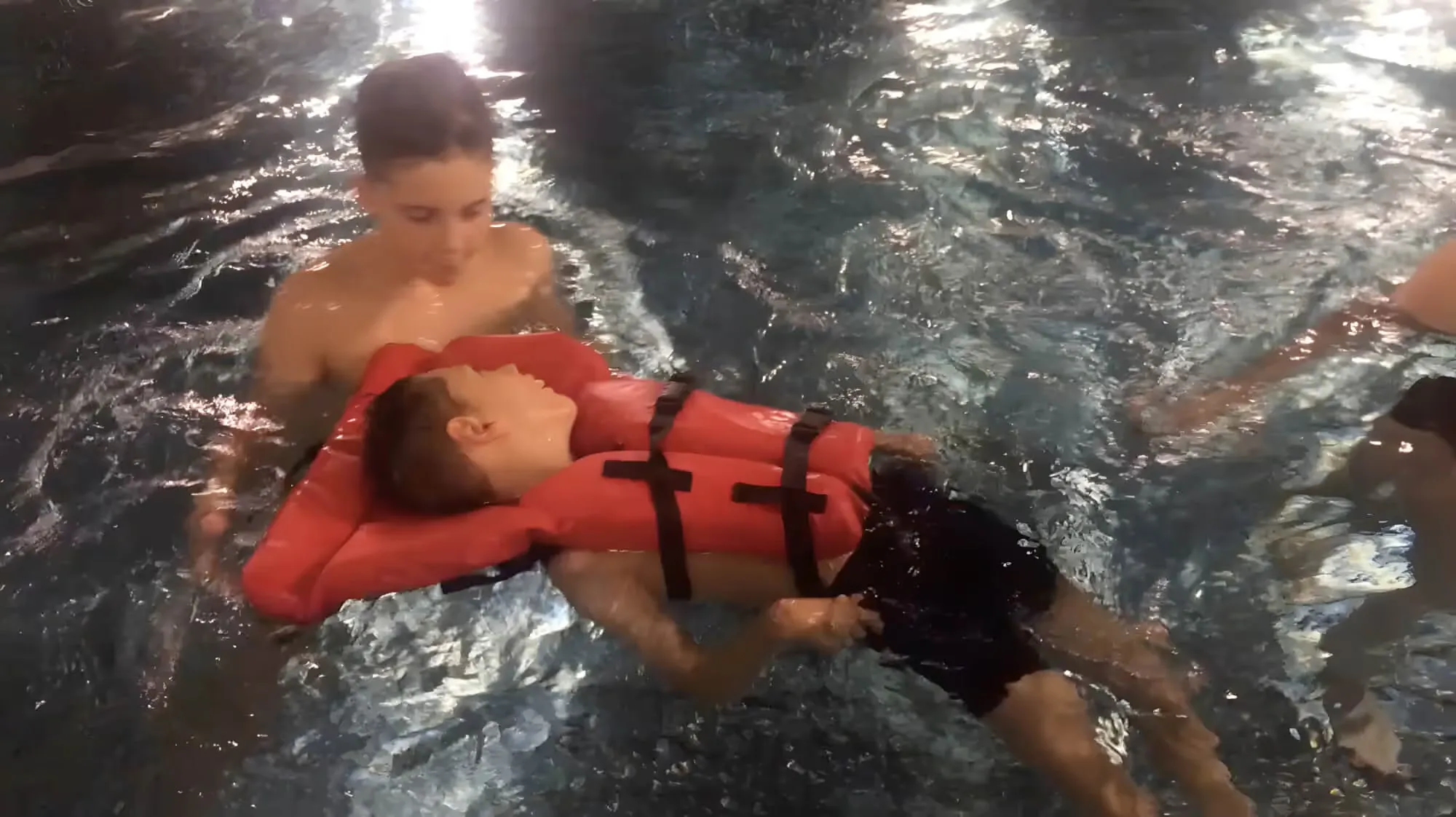
Mikkel was Lena's son. He had cerebral palsy and needed help with everything. In the standing frame from the assistive technology centre he rarely smiled. In the water, Mikkel was free.
Mikkel taught us to ask a different question. Not what can we get him to do, but what does he want to do? That question is why MoveMe exists.
And then we met Kjell Bjørn
He had a stroke in 2024 and was the first member of our expert panel. A wonderful person with enormous drive. He is the proof that you can come a long way. That is exactly what we want for more people.
We want everyone to get the chance to find their own way back to life.
Can this work?
Research from Sunnaas Rehabilitation Hospital and OsloMet points the same way. Digital training at home, alongside health professionals. Developed with clinicians and users. Solutions that make it easier to train where life happens.
“Anything you can do at home on your own, where your life happens, will be very useful and innovative in stroke rehabilitation.”
We have clinicians, researchers, patient organisations, rehabilitation communities and the municipality with us. Each holds an important part of what we need to make this work.
Now we test it for real
We are working towards a pilot in Bærum: 10 to 12 stroke survivors, about 12 weeks, home training with MoveMe combined with meeting in person. Together with Bærum municipality, the Norwegian Stroke Association and Unicare, and in dialogue with Sunnaas.
And we will measure whether it actually makes a difference.
is the possible value to society over 20 years, in a medium scenario, according to an external socio-economic analysis.
But the most important number isn't 1.9 billion. Behind every single number there is a person who gets a little more of their life back.
Our supporters


Want to be part of it?
Have you had a stroke? Are you a relative, a physiotherapist, or do you work in a municipality? We are looking for test users, clinicians and partners who want to help shape the way forward.
Get in touchDon't design for users. Design for life.