The story of MoveMe
It doesn't start with technology. It starts with a boy called Mikkel.
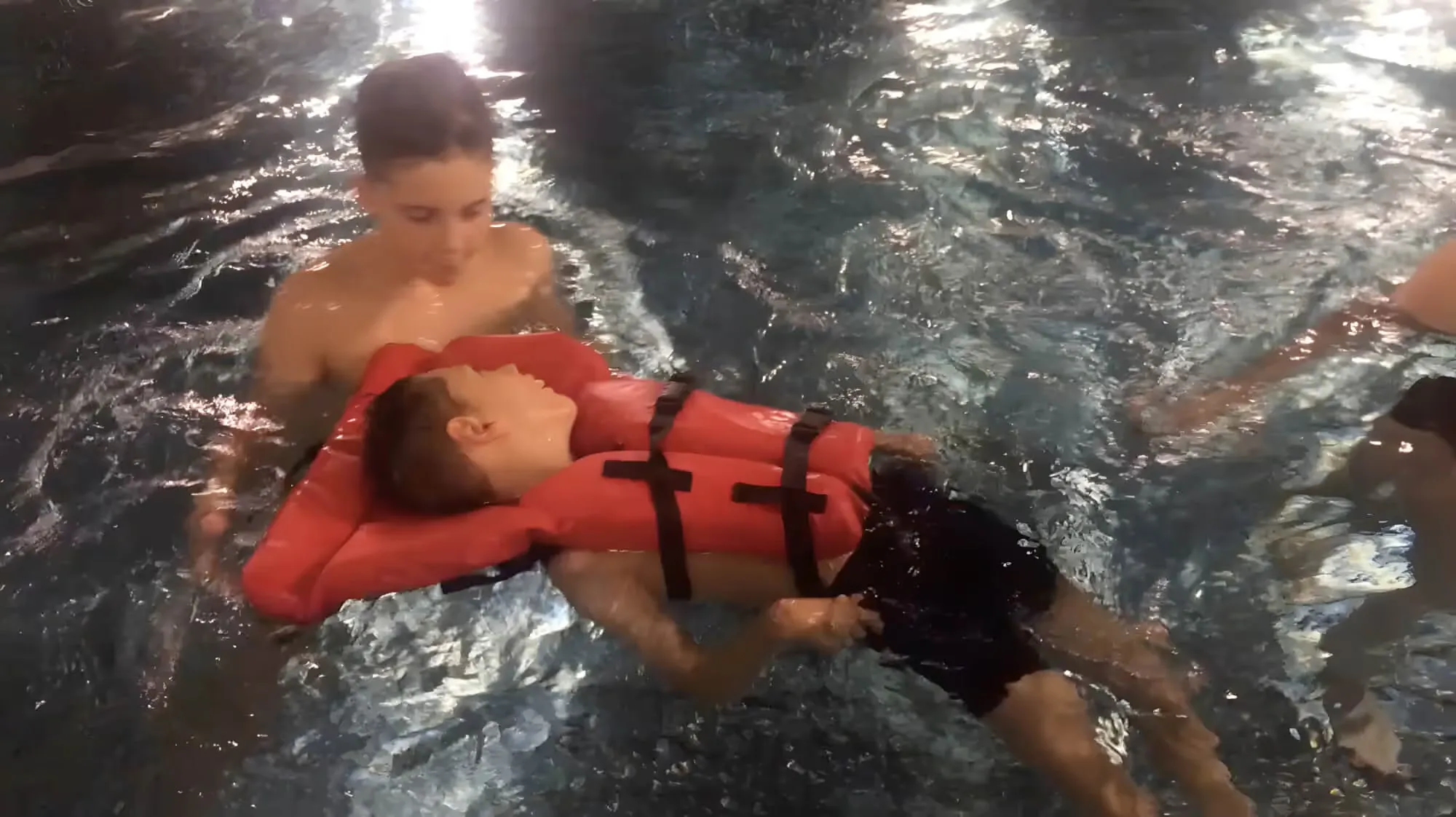
Mikkel
Mikkel was Lena's son. He had cerebral palsy and multiple disabilities. He had no verbal language, and he needed help with absolutely everything in daily life.
And he was a true spreader of joy who loved life. No one has taught us as much about life as he did.
He rarely smiled in the advanced standing frame from the assistive technology centre. Movement is good. But it wasn't Mikkel's choice to be strapped in while the machine made the movements for him.
In the water, Mikkel was free. He was weightless, it was fun, it was easy to move. There he could be Mikkel, together with his big brother Markus.
A different question
Mikkel taught us to ask a different question. Not what can we get him to do, but what does he want to do? What gives him mastery? What gives him joy?
It may sound like a small difference. For us it changed the whole way of thinking about design.
We are very good at designing solutions the way we want people to use them. But we are bad at designing for the lives people actually want to live.
Don't design for users. Design for life.
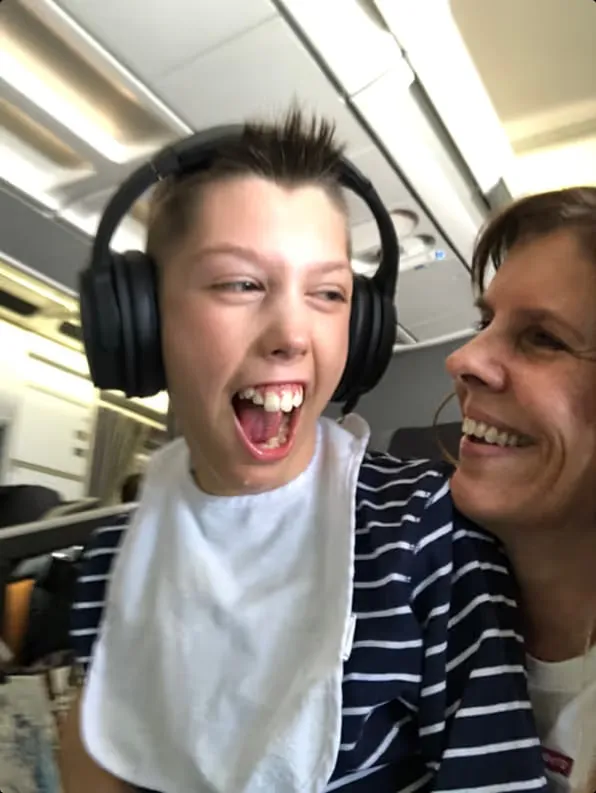
The oven bag
One day Lena was making a big turkey dinner. She had a spare oven bag and gave it to Mikkel. He quickly understood that he could make those lovely crackling sounds. And suddenly he started moving his fingers entirely on his own. He smiled. He understood that he was the one making this sound.
What if we made small sensors that reacted to the movements of his arms and legs? We started experimenting with light sensors in a band around the arm. Tiny movements triggered a response: one of Mikkel's favourite sounds, or the next song on his playlist.
When Mikkel was 13, he could call for his mum for the first time. With a small sensor on his arm.
Mikkel lived to almost 14. He died in 2020. What he taught us about people is what we build on today.
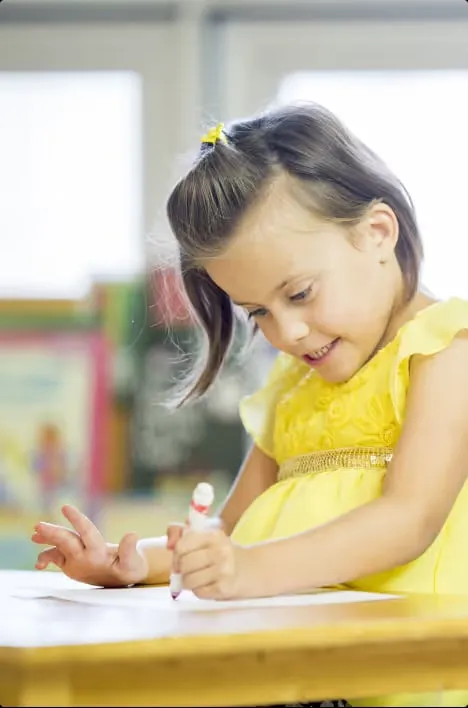
MoveMe 1.0: for children and young people with cerebral palsy
The first product was sensor wristbands and an app. The sensors attach to hands or legs and register movement. In the app you connect sounds and actions to the movements. Cause and effect. His own initiative, not force.
MoveMe 1.0 was developed and tested with Sunnaas Rehabilitation Hospital, Aurora Verksted, Haug school and resource centre, neurologists and researchers. Many children have tried it, and their experience shaped everything that came after.
The CP track is not shelved. It is where we want to return, once the stroke program stands on its own feet.
What about everyone else?
If this can give children with cerebral palsy more desire to move, what about everyone else who needs to move and train?
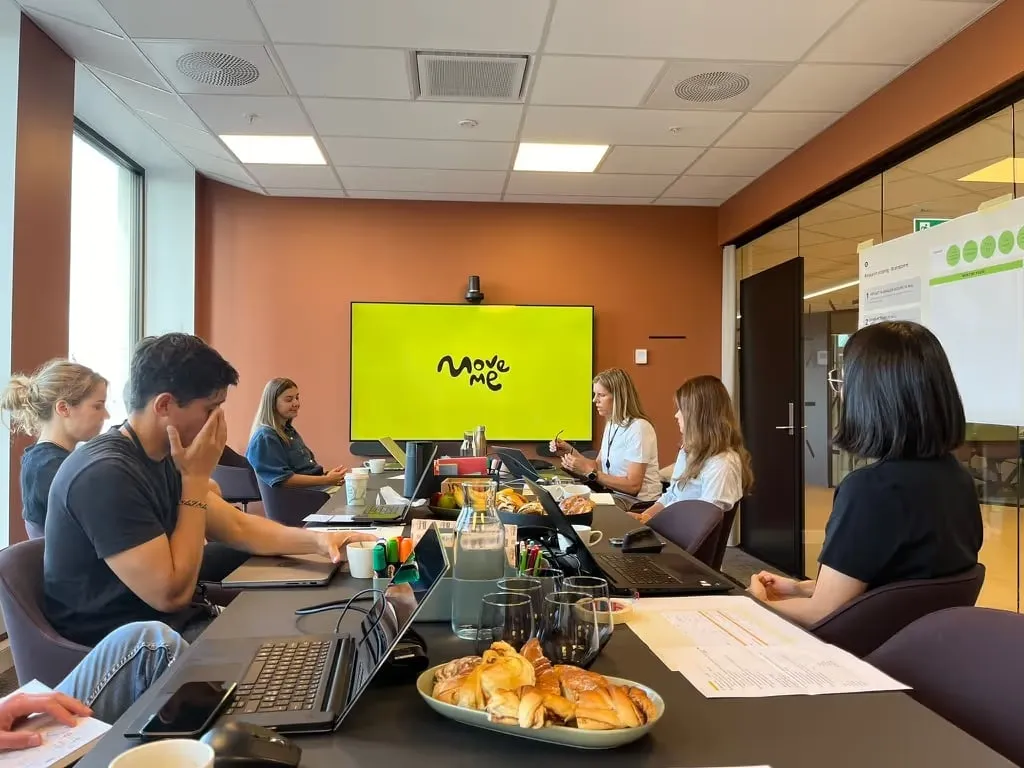
We are designers. We are used to seeing people with challenges and reading their needs. So we did the same for stroke survivors: workshops with people who have had a stroke, with relatives, and with doctors, nurses, physiotherapists, occupational therapists and speech therapists.
The picture was clear. Rehabilitation often stops when you come home. The need for safe training and motivation is great. And we saw that we didn't need sensors. A phone with a camera is enough.
MoveMe for stroke survivors
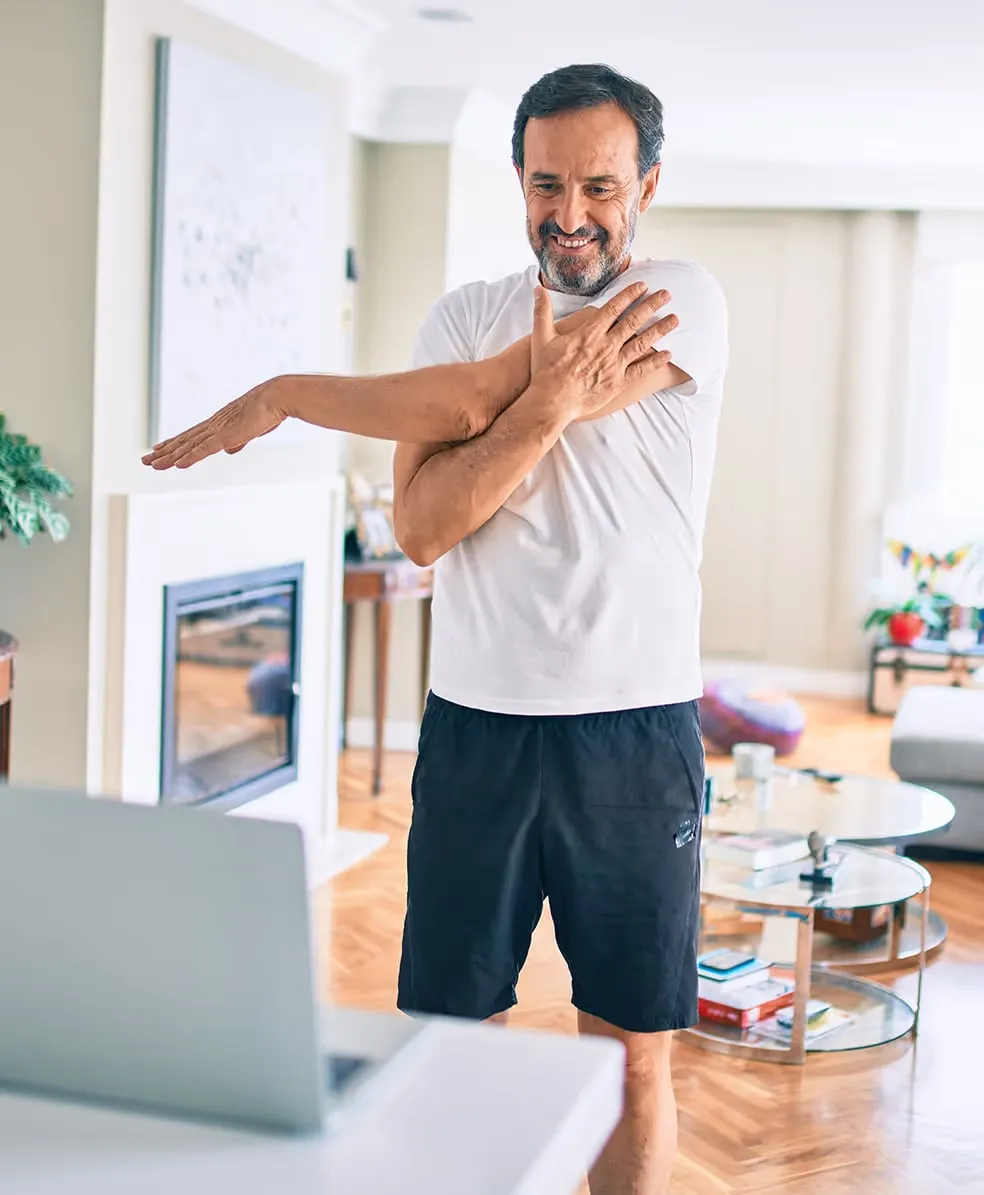
Today MoveMe is a home-based rehabilitation program for people who have had a stroke. The app is the tool. The program is the project.
The phone camera sees the movement, counts the repetitions and corrects you. Some of the exercises are wrapped as games. Family, friends and clinicians can follow along and cheer. And we build a community around it, because no one should train alone.
The program is developed together with stroke survivors, physiotherapists and the clinical community. The first stop is a pilot in Bærum.